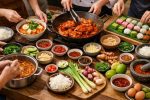
How to Eat Like a Local in Singapore Hawker Centres and Food Trails
Singapore doesn’t do half-measures with food. Most seasoned travellers who land at Changi aren’t thinking about the hotel. They’re thinking about their first bowl of laksa. Hawker centres are the city’s real dining rooms, and eating at them is not a sightseeing box to tick. It is how every local eats, every day, without ceremony or fuss. If you want to understand Singapore, eat where the city actually eats.
Hawker Centre Essentials
- Hawker centres serve world-class local dishes for just three to six Singapore dollars a plate, making them the best-value meals in the city.
- Maxwell Food Centre, Lau Pa Sat, and Old Airport Road Food Centre are the three must-visit stops for any first-timer.
- Arriving before noon or after 2pm beats the lunchtime crush and gives you a real shot at finding a seat without a long wait.
What Makes Singapore’s Hawker Culture Unlike Anything Else
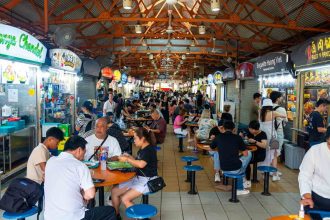
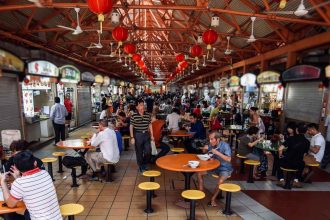
Singapore’s hawker centres are not food courts. The distinction matters. These are open-air or semi-covered spaces where individual stall operators have spent years, often decades, perfecting a single dish or a tight family of dishes. You will find a stall that does nothing but Hokkien prawn noodles. Another that makes only one type of congee. That kind of focus produces food at a level most restaurants cannot match.
In 2020, Singapore’s hawker culture earned heritage recognition from UNESCO, one of the rare times a food tradition centred on working-class street eating was acknowledged at that level. The listing confirmed what locals had always known: this is food that carries identity, history, and community in every bowl.
The government has worked to preserve hawker culture through subsidised stall rentals and succession programmes that bring younger cooks into the trade. That effort means the centres stay genuinely local rather than becoming a performance of what local once looked like.
Three Hawker Centres That Should Be on Every Itinerary
Maxwell Food Centre
Maxwell is the one most visitors hear about first, and the reputation is deserved. The centre sits in the Tanjong Pagar area, close enough to Chinatown to combine with a morning walk. The stall everyone points to is Tian Tian Hainanese Chicken Rice, and the queue forms early. Arrive at 11am before the office crowd descends. The rice is fragrant and just oily enough. The chicken is poached until barely cooked through. Do not skip the chilli sauce.
Maxwell is more than one stall, though. Walk the full length before committing. You will pass fishball noodles, popiah, braised duck, and a dozen variations of things you may never have tried. Give yourself time to look before you queue.
Lau Pa Sat
Lau Pa Sat occupies a Victorian cast-iron market in the central business district, which makes it unlike most other hawker centres in Singapore. The architecture is genuinely striking. At lunchtime it fills with office workers. After 7pm, the street outside is closed to traffic and satay stalls set up along the road. Smoke from dozens of charcoal grills drifts across the whole block. Order a mixed satay platter with peanut sauce, compressed rice, and cucumber. Pair it with a cold Tiger beer or a fresh lime juice.
Old Airport Road Food Centre
Old Airport Road is the choice for people who have already visited Maxwell and want to go deeper. The centre is in the Geylang area, one of the most genuinely interesting neighbourhoods in the city. The food here is exceptional. The Hokkien mee at several stalls is widely considered among the best in Singapore. The char kway teow is fried over intense heat with a visible wok hei, the breath of the wok, that you can taste in every forkful. This is not a dish that transfers well to air-conditioned restaurants. It needs the open heat and the pace of a hawker stall to be what it is.
The Dishes Worth Seeking Out Across the City
Part of eating well in Singapore is knowing what to look for before you arrive. These are the plates you should be working through during your visit:
- Chicken rice: Poached or roasted, served with fragrant rice cooked in stock and a trio of sauces. The simplest dish on paper, but endlessly argued over by people who take it very seriously.
- Laksa: A spiced coconut milk broth with thick rice noodles, prawns, cockles, and tofu puffs. Singapore’s version leans rich, creamy, and deeply savoury.
- Char kway teow: Flat rice noodles stir-fried at fierce heat with Chinese sausage, egg, beansprouts, and sometimes cockles. The smoky, slightly charred edge is the whole point.
- Hokkien mee: Yellow noodles and rice vermicelli braised in a prawn and pork stock, finished in a wok with egg and sambal served on the side.
- Rojak: A salad of fruit, dough fritters, and vegetables in a dark prawn paste sauce with ground peanuts. Strange in description and immediately addictive in practice.
- Kaya toast with soft-boiled eggs: Not a main course, but a ritual. Coconut jam on toast, eggs cracked into a shallow bowl, seasoned with light soy and white pepper. Order it for breakfast at any kopitiam.
Skipping the Familiar and Getting to the Good Stuff
A lot of travellers arrive in a foreign city and drift toward the recognisable. It is a natural impulse. When you are tired and disoriented, a sign you already know feels like a small comfort. This is the same instinct that drives fast food travel habits, sending visitors into chain restaurants they could eat at home, in cities that are offering something genuinely irreplaceable around the corner.
Singapore makes that trade-off particularly easy to avoid. Hawker centres are fast. A plate of chicken rice takes about three minutes to land in front of you after you order. Prices sit between three and six Singapore dollars for most dishes. The food is real, local, and often prepared by someone who has been doing exactly this for thirty years. There is no meaningful compromise between speed, price, and quality here. The hawker centre wins on all three counts, and it wins without any effort on your part.
How to Order, Pay, and Find a Seat
First-timers sometimes feel uncertain about the process. It is simpler than it looks. Here is how a typical visit goes from start to plate:
- Walk through the centre first to get a sense of what is available. Do not commit to the first stall you pass.
- Choose your stall and join its queue. Stalls with steady queues at off-peak hours are almost always worth the wait.
- Order directly at the counter. Most stall operators handle food orders in English without any difficulty.
- Pay at the stall. Cash is the default and the fastest option. Some newer stalls accept NETS or PayNow via QR code if you prefer.
- Collect your food and find a free table. Seats are shared across the entire centre. Sitting down next to strangers is completely normal and expected.
- Use a packet of tissue paper to chope your seat before you queue if the centre is busy. Placing tissue on a plastic chair is a widely understood local signal that the seat is taken.
One practical note on timing: the worst period to arrive at any hawker centre is between 12pm and 1:30pm on a weekday. Every office worker within a ten-minute walk has the same idea. Arriving at 11:30am or waiting until 2pm changes the experience considerably, both in terms of queuing time and the quality of your meal when you are not rushed.
Neighbourhood Food Trails Worth Building Into Your Plans
Geylang is one of the most rewarding areas for late-night eating. Durian stalls line the road in season, and the varieties on offer here go well beyond what you would find at a hotel buffet. Frog porridge is a local speciality in this neighbourhood, and it is genuinely delicious. The area stays busy and well-lit well past midnight, which makes it a natural end to an evening spent elsewhere in the city.
Chinatown’s Smith Street and the surrounding blocks carry a concentration of traditional food businesses, from bak kut teh shops to old-school kopitiam coffee houses where the coffee is brewed through a sock filter and the toast comes out on a small tray. Tiong Bahru, one of Singapore’s oldest housing estates, has a wet market with a hawker centre above it that opens from early morning. The breakfast crowd is entirely local and the food quality is consistently high.
Katong and Joo Chiat in the east form a long stretch of Peranakan food culture. This is where you find the definitive bowl of katong laksa, served in a short glass of broth with noodles already cut into shorter lengths so you eat with a spoon rather than chopsticks. It is a small detail that signals a very specific culinary origin. A morning in this neighbourhood, starting with laksa and ending with a slice of kueh from one of the bakeries, makes for one of the better food walks in the city.
Every Meal Here Tells You Something the Guidebooks Cannot
The hawker centre is where Singapore’s daily life plays out. Office workers, retirees, students, and families all share the same plastic tables and order from the same stalls. There is no formal service, no dress code, and no reservation required. You bring your appetite and an open mind, and the city handles everything else.
Start at Maxwell on your first morning. Work outward from there. Old Airport Road on your third day. Lau Pa Sat on an evening when you want a beer and satay smoke in the air. Follow the queues. Ask the stall operators what they recommend. Eat at the hours that locals eat rather than the hours that tourists tend to eat. That one shift in timing changes everything about what you find and who you find it alongside.