How to Eat Well in Singapore on a Backpacker’s Budget
Singapore has a reputation for being expensive. That reputation is only half-true. Hotels cost money. Tourist-facing restaurants in Clarke Quay will drain your wallet before you finish the first course. But food, proper local food eaten at hawker centres and neighbourhood coffee shops, is some of the best value anywhere in the region. A plate of char kway teow at Chinatown Complex costs S$4. A bowl of laksa at Maxwell Food Centre runs about S$5. Your food budget here does not have to hurt.
The Essentials at a Glance
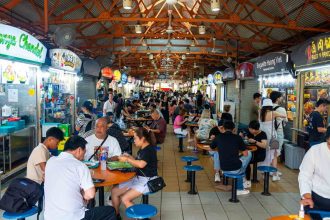
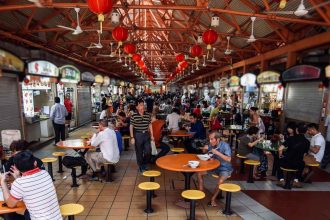
Singapore’s hawker centres are the backbone of budget eating in the city. A full meal here costs between S$3 and S$6. Eating all three meals at hawker centres keeps your daily food spend under S$20, sometimes comfortably under S$15. The best value spots are spread across Chinatown, the city fringe, and the older residential estates. Setting a clear daily number before you arrive makes the whole trip much easier to plan and enjoy.
Start with a Number Before You Book Your Flights
The worst thing you can do is land in Singapore with no idea how much your food will cost. Not because the city is wildly unpredictable, but because having a number gives you permission to eat freely within it. Before my last trip, I used a travel budget calculator to work out exactly how much to set aside for daily meals. Plugging in three hawker meals a day, a couple of drinks, and the occasional bubble tea gave me a clear target of about S$18 to S$22 per day. That number held up almost exactly across the whole trip.
Plan for S$5 per meal as your baseline. That covers a main dish and sometimes a drink. If you stick to hawker centres and local coffee shops, you will rarely pay more than that per plate. Add a small buffer for days when you want fresh sugar cane juice or a cold coconut at one of the outdoor stalls near East Coast Park.
The Two Hawker Centres Worth Building Your Days Around
If you only have a few days in Singapore, these two are non-negotiable.
Chinatown Complex Food Centre on Eu Tong Sen Street is the largest hawker centre in the country. It has over 260 stalls spread across two floors. The ground floor is where you find the cheaper, older stalls. This is where long-standing wonton noodle vendors operate, where roast duck rice has been perfected over decades, and where a plate rarely crosses S$4.50. It gets packed at lunch. Arrive just before noon or after 1:30pm to avoid the worst of it.
Maxwell Food Centre, a short walk from Chinatown MRT, is smaller but just as iconic. Tian Tian Hainanese Chicken Rice has been here long enough to become a Singapore institution. The queue moves at a steady pace, and the S$5.50 plate earns every cent. Maxwell also has a reliable popiah stall, good fried carrot cake, and a few dessert options that cost under S$2. It is clean, reasonably ventilated for an indoor hawker centre, and easy to reach by train.
All hawker centres across Singapore fall under the same rigorous hawker centre oversight framework run by the National Environment Agency. That means even a budget stall in a residential estate operates under the same food hygiene standards as any well-known tourist spot, which is one of the reasons eating cheap here never feels like a gamble.
Dishes That Fill You Up Without Draining Your Wallet
Not every hawker dish is equally filling for the price. Some plates look generous and leave you hungry an hour later. The ones below consistently give you the best value per dollar spent:
- Hainanese chicken rice: Usually S$4 to S$6 for a plate with steamed rice, soup, and chilli. One of the most complete single-dish meals in the city.
- Char kway teow: Flat rice noodles stir-fried with egg, bean sprouts, and cockles in dark soy sauce. Heavy and filling for S$4 to S$5.
- Nasi lemak: Coconut rice with a fried egg, ikan bilis, sambal, and peanuts. The most satisfying S$3.50 breakfast you will find anywhere in Southeast Asia.
- Laksa: Spicy coconut curry noodle soup with prawns or fish cake. Rich and filling, usually S$4 to S$5 at a proper hawker stall.
- Bak chor mee: Minced pork noodles in a tangy vinegar-chilli sauce. Light enough to eat twice in a day, and rarely over S$4.50.
- Economy rice (cai fan): Pick three dishes over rice for around S$3.50 to S$5. The most practical option when decision fatigue sets in after a long day.
What a Typical Day Costs at These Prices
Running the numbers on a full day of hawker eating, this is what spending looks like in practice:
| Meal | What You Order | Approximate Cost |
|---|---|---|
| Breakfast | Kaya toast + soft-boiled eggs + kopi | S$3.50 to S$5 |
| Lunch | Chicken rice or char kway teow | S$4.50 to S$6 |
| Dinner | Economy rice with three dishes | S$3.50 to S$5 |
| Drinks | Kopi, teh tarik, or sugar cane juice | S$1.20 to S$2.50 |
| Daily Total | S$12.70 to S$18.50 |
Other Neighbourhoods Where Cheap Good Food Hides
Chinatown and Maxwell get the most attention from visitors. That is fair, they are excellent. But staying in the city for more than a few days means expanding your radius, and that pays off well.
Tekka Centre in Little India has one of the best selections of South Indian and Malay food in Singapore. A banana leaf rice meal there costs about S$5 and arrives piled with steamed rice, dal, two vegetable sides, and a small piece of fried fish. It is the most food per dollar you will find in the city. The Indian rojak stalls here are also worth tracking down.
Old Airport Road Food Centre in Geylang is a local favourite that rarely appears in tourist guides. It requires a longer MRT ride from the city centre, which keeps the crowd local and the prices honest. The oyster omelette stall has a reputation that stretches across the island, and a bowl of prawn noodles at the better stalls costs S$4 to S$5.
Toa Payoh is one of the oldest public housing estates in the country and has hawker centres that operate almost entirely for residents nearby. Prices run lower than in tourist-facing areas because the competition is between neighbours, not Instagram accounts. If you are comfortable on the MRT and do not need your meal to come with a backstory on a chalkboard, Toa Payoh rewards you generously.
Breakfast in Singapore Is Worth Getting Up Early For
A common mistake among backpackers is skipping breakfast to cut costs. In Singapore, breakfast is where you find some of the cheapest and most satisfying food of the entire day.
A traditional kopi shop breakfast of kaya toast, two soft-boiled eggs with dark soy sauce and white pepper, and a cup of kopi costs about S$3.50 to S$4.50 total. Kopi is the local coffee, brewed strong through a cloth filter sock and usually served with condensed milk. It is thick, slightly sweet, and nothing like anything you will get at a chain cafe. Teh, the local milk tea, is brewed the same way and costs about the same. Both are infinitely better than what you would pay five times more for at an airport food hall.
The coffee shops at hawker centres open early, sometimes from 6am. If you have an early tour or just prefer mornings, this is one of the more pleasant ways to start a day in the city. A proper breakfast here fuels you through to a late lunch without any snacking costs in between.
Habits That Keep Your Bill Under S$20 a Day
After eating through Singapore on a tight budget across multiple visits, a few habits made the biggest practical difference to daily spending:
- Eat at off-peak hours. Hawker centres crowd between 12pm and 1:30pm and again around 7pm. Arriving before or after those windows means easier seating and sometimes faster service.
- Drink kopi or water over soft drinks. A can of Coke at a hawker centre costs more than a full glass of kopi. Tap water in Singapore is safe to drink straight from the sink and costs nothing.
- Order takeaway (ta bao) when you want to eat somewhere quieter. Hawker stalls pack food in containers with no added markup, unlike some food courts that charge a takeaway premium.
- Avoid eating in tourist zones. Clarke Quay, Marina Bay Sands, and Orchard Road have food, but prices run two to three times higher than hawker centres a few MRT stops away.
- Check the NEA hygiene grade posted at each stall. An A or B rating confirms the stall has been recently inspected. Every rated stall is regulated, which means even the cheapest plate has been made in a standardised kitchen.
- Head to heartland food courts over city-centre ones. The further you travel from the Marina Bay area, the cheaper and more local your options become. This is not a sacrifice in quality. It is usually an improvement.
The Plate Tells the Whole Story
Singapore is the kind of place where a S$5 meal can genuinely be the best thing you eat on an entire trip. The hawker centre system has been refined over decades, producing stall owners who have spent years perfecting a single dish. The char kway teow uncle at Chinatown Complex has been working that wok longer than many backpackers have been alive. That level of repetition and dedication shows up on the plate in a way no trendy restaurant can manufacture.
Eating well here on a tight budget is not about sacrifice or settling. It is about direction. Know which hawker centres to prioritise. Know which dishes give you the most for your money. Set your daily number before you land. Do those three things and Singapore feeds you extraordinarily well for a fraction of what you might expect to spend. Most evenings you will finish dinner with change still in your pocket and find yourself wondering what all the fuss about expensive Singapore was ever about.