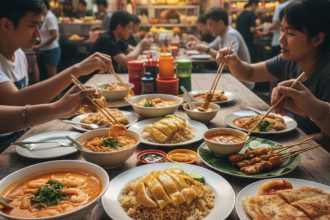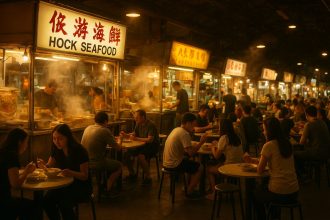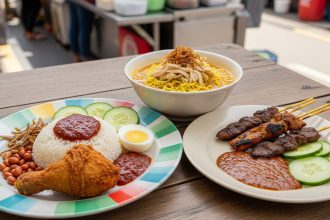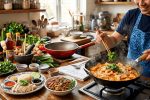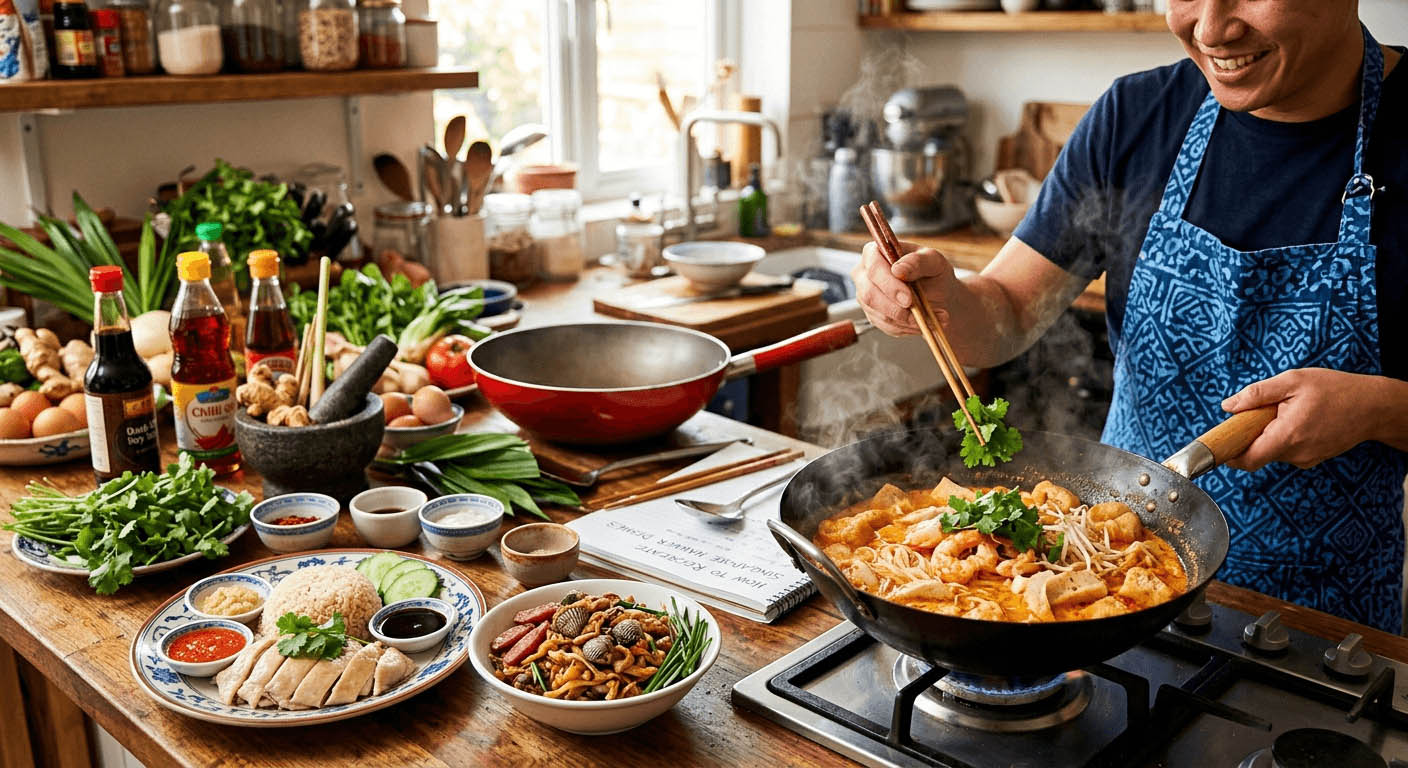
Singapore’s hawker centres have fed generations. A plastic stool, a wobbly table, a bowl of laksa that arrives in under three minutes and tastes like it has been cooking for hours. That combination of speed and depth is what makes hawker food so extraordinary. And for years, home cooks have assumed it cannot be replicated outside of a hawker stall. That assumption is wrong. The techniques are learnable. The ingredients are findable. The results, with some practice, are genuinely close to the real thing.
Your Hawker Kitchen Cheat Sheet
- Spice pastes, called rempah, are the backbone of most hawker dishes and must be cooked low and slow in oil
- Wok hei (the smoky char) comes from high heat, a carbon steel wok, and cooking in small batches
- Aromatics like lemongrass, galangal, and belachan are essential and cannot be faked
- Broth-heavy dishes like laksa and bak kut teh reward patience above everything else
- Chili crab and sambal stingray are far more achievable at home than most people think
The Spice Paste That Holds Everything Together
If you want to understand Singapore hawker cooking, start with the paste. In Malay cooking, this wet spice base is called rempah. It is ground from dried chilies, shallots, garlic, lemongrass, galangal, fresh turmeric, and candlenuts. It forms the flavor foundation of dishes like laksa, rendang, mee siam, and otah.
Making it well requires two things: a heavy mortar and pestle (or a blender with patience), and the willingness to fry the paste until the oil separates. That frying stage is called tumis. You cook the paste in oil over medium heat, stirring constantly, for 15 to 20 minutes. The water evaporates. The sugars caramelize. The paste turns a deeper color and smells completely different from the raw version. That transformation is not optional. Skipping it is the single biggest mistake home cooks make.
Once you get comfortable with rempah-based cooking, you will find that most hawker dishes follow a recognizable pattern: paste first, protein second, liquid third. That structure repeats across cuisines far beyond Singapore’s borders. Browsing a wider range of Asian recipes helps reinforce those patterns and shows you how different countries approach the same foundational spice-building technique.
Wok Hei: Getting That Smoky Char Without a Commercial Burner
Wok hei, literally “breath of the wok,” is the defining characteristic of a proper plate of char kway teow or hokkien mee. It is the faintly smoky, caramelized edge that you taste in the background of every bite. It comes from very high heat, very fast cooking, and a wok that has been properly seasoned over time.
Home stoves do not produce the output of a hawker’s gas burner. But you can get surprisingly close with the right approach:
- Choose a carbon steel wok, not non-stick and not stainless steel. Carbon steel builds up a seasoning layer that improves with every use.
- Preheat the wok until it smokes before adding any oil. The oil goes in only once the surface is genuinely hot.
- Cook in small batches rather than piling everything in at once. A crowded wok steams instead of frying.
- Keep ingredients moving constantly so every surface touches the hot metal.
- Add sauces at the wok’s edge, not directly into the center. Letting the sauce caramelize briefly on the hot metal before mixing in adds layered depth.
- Use lard where possible. Many hawker stalls use pork fat rather than vegetable oil. It handles high heat cleanly and adds richness that plant-based oils cannot replicate.
Your first char kway teow at home will likely be a little flat. The second will be better. By the third attempt, your kitchen will fill with that unmistakable, slightly charred smell. That is the moment you know you have crossed over.
The Aromatics You Cannot Afford to Skip
Hawker cooking uses aromatics differently from many Western cooking traditions. Here they are not just background notes. They are structural. The dish does not make sense without them.
- Lemongrass: Bruised and simmered in broths, or finely sliced and blended into rempah. Bright, citrusy, unmistakable.
- Galangal: Sharper and more piney than ginger. Used in laksa paste, bak kut teh, and a range of Peranakan dishes.
- Pandan leaves: Tied into knots and added to rice for a grassy, vanilla-adjacent fragrance. Also used in kueh and desserts.
- Belachan (dried shrimp paste): Toasted in foil until fragrant, then ground into sambal. Pungent before cooking, deeply savory afterward. There is no real substitute.
- Kaffir lime leaves: Torn and added to curries and soups. The citrus oils in the leaves release as they cook and perfume the whole dish.
- Candlenuts: Blended into rempah to add body and a subtle creaminess. Macadamia nuts can stand in if needed, though the flavor is slightly different.
Most of these are available at any Asian supermarket. In cities with smaller Asian communities, specialty stores and online suppliers usually carry the full range. Do not try to substitute your way through a dish the first time. Get the real ingredients, even if it takes a bit more effort. The flavor difference is not minor.
Laksa, Bak Kut Teh, and Mastering the Hawker Broth
Some of the most beloved hawker dishes in Singapore are broth-centered. The broth is not a background element. It is the point.
Laksa starts with a deeply caramelized rempah, enriched with coconut milk, and finished with a shrimp or chicken stock base. The coconut milk must go in after the paste has fully cooked, and it should simmer gently rather than boil to avoid splitting. Toppings like tofu puffs, bean sprouts, prawns, and cockles are added fresh at serving time. The noodles, whether rice vermicelli or thick laksa noodles, go in at the very end.
Bak kut teh is structurally simpler but equally demanding. Pork ribs simmer in a broth seasoned with white pepper, garlic, and a bundle of dried Chinese herbs. The pepper level in a good Singaporean bak kut teh is assertively high, far more than most home cooks expect. The broth should be clear, deeply flavored, and rich enough to coat a spoon. It takes at least two hours of slow simmering.
Fish head curry rounds out the broth-heavy hawker canon. The curry base uses a South Indian-influenced spice blend, and the broth gets its sourness from tamarind. The fish head is added late, cooked just until the flesh pulls cleanly from the bone.
All three dishes share the same underlying logic: build flavor in layers, give them time, and resist the urge to rush. If you want to see how these techniques translate across different regional styles, there is a solid resource in the collection of soups and stews that covers the full spectrum of broth-based cooking approaches worth studying.
Chili Crab and Sambal Stingray: Singapore Seafood at Home
Chili crab is the dish most visitors associate with Singapore. The sauce is thick, slightly sweet, richly spiced, and finished with beaten egg stirred in at the end to create a silky, glossy coating. It is served with deep-fried mantou buns for scooping. Getting it right at home requires fresh crab, ideally mud crab. Frozen crab loses much of its sweetness. The sauce base is blended from shallots, garlic, ginger, and dried chilies, fried down in oil, then combined with a mix of tomato ketchup, sugar, stock, and oyster sauce. The egg goes in last, poured in a thin stream while stirring constantly.
Sambal stingray is equally iconic. A thick sambal paste, made from dried chilies, belachan, and shallots, is spread over cleaned stingray and grilled on banana leaf over high heat. The banana leaf prevents sticking and adds a subtle grassy aroma. The sambal must be cooked in oil before spreading, otherwise the raw chili taste survives the grill. Serve with calamansi halves and cucumber on the side.
Both dishes require confidence with high heat and with bold seasoning. If you want to build toward them gradually, working through a range of seafood recipes that use similar spicing and cooking techniques is a practical way to sharpen the skills before tackling a whole chili crab.
Setting Up Your Hawker-Inspired Kitchen
You do not need a commercial setup. But a few specific pieces of equipment genuinely change the results:
- Carbon steel wok: The most important tool in your hawker kitchen. Season it properly from the start and maintain it carefully.
- Heavy granite mortar and pestle: For a rempah with real texture, a blender produces something good. A mortar and pestle produces something better.
- Claypot: Used for bak kut teh, claypot chicken rice, and dishes that need sustained, even heat retention.
- Spider strainer: For blanching noodles and vegetables quickly without overcooking them.
- Banana leaves: Stocked in the freezer, thawed when needed, and used for sambal dishes and otah.
A Note on Ingredient Sourcing
Fresh galangal, pandan, belachan, and dried tamarind are the four ingredients that cause the most trouble for home cooks outside of Southeast Asia. All four are available at most Asian grocery stores. Belachan lasts for months in the fridge. Pandan can be grown from cuttings on a windowsill with minimal effort. Galangal freezes well. Tamarind blocks keep indefinitely in a cool pantry. Stock up once and you are set for months of cooking.
From Hawker Centre to Your Dinner Table
There is a particular satisfaction in getting a hawker dish right at home. Not because it is easy, but because it is the result of actual technique. The paste you ground. The wok you preheated until it smoked. The broth you watched simmer for two hours without touching it. These are not shortcuts. They are the method.
Singapore’s hawker food tradition is built on discipline, repetition, and an almost stubborn commitment to doing things the right way. That same discipline translates perfectly into a home kitchen. Start with one dish. Learn its paste, its aromatics, its timing. Get it right. Then move to the next.
The hawker centre is not going anywhere. But the day you serve a bowl of laksa or a plate of chili crab that actually tastes the way you remember it, you will understand why the effort was always worth making.